
A Study of 1,000 Gubernatorial Incumbents
Vermont governors have won 23 consecutive reelection bids – best in the nation
 Fifteen governors have declared their candidacies to seek another term in the 2026 election cycle (with the intentions of three others still to be determined). If past is prologue, one or more of these officeholders will be defeated at the ballot box.
At least one incumbent governor has been defeated in every midterm election dating back more than 110 years.
In fact, four or more governors have been unseated in all but four of the 28 midterms held since 1914. The outlier cycles are:
- 1986 (3): Alaska Democrat Bill Sheffield (primary), Texas Democrat Bill White, and Wisconsin Democrat Tony Earl
- 1998 (2): Alabama Republican Fob James and South Carolina Republican David Beasley
- 2006 (2): Alaska Republican Frank Murkowski (primary) and Maryland Republican Bob Ehrlich
- 2022 (1): Nevada Democrat Steve Sisolak
But a review of the last 1,007 election bids by sitting governors conducted since 1914 finds that incumbents have been victorious at the same rate in midterms as they have in presidential election cycles.
Overall, incumbents have won 709 of 1,006 elections since 1914, or 70.4 percent of their bids for another term. That rate is nearly identical in midterms (70.9 percent) and presidential cycles (70.7 percent). [Incumbents won 28 of 43 bids for another term in odd-numbered election years, or 65.1 percent].
Incumbent governors have fared better during the 21st Century, winning 166 out of 195 races, or 85.1 percent of their campaigns.
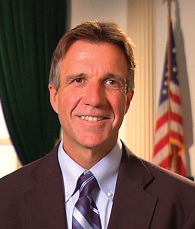
One of the three governors yet to declare his 2026 intentions is Vermont Republican Phil Scott (pictured) – who, despite leading a deep blue state, has little reason to worry that he would fail in a bid for a sixth term. Frequently ranked as one of the most popular governors in the nation, Scott also heads a state where incumbents have enjoyed unsurpassed success in winning reelection.
During this period under analysis, sitting Vermont governors have won 30 of 32 bids for another term (93.8 percent) – best in the nation.
In fact, Vermont governors have successfully run for reelection in 23 consecutive attempts – also the largest streak by far in the nation.
The most recent governor to fail at the ballot box in the state was first term Republican Ray Keyser in 1962. Keyser was notably defeated by Democratic state Representative Phillip Hoff by 1,315 votes, which marked the first time the GOP had lost the governorship since the formation of the Republican Party in 1854.
Following Vermont, Connecticut is next with each of the last 11 gubernatorial incumbents successful in their bids for a subsequent term. The last loss by a Connecticut governor was Republican John Lodge in 1954 to U.S. Representative Abraham Ribicoff.
The only other state with a longer period since an incumbent was unseated at the ballot box is Tennessee. In 1952, Governor Gordon Browning lost the Democratic primary to attorney Frank Clement.
Following Vermont and Connecticut, the largest active incumbent winning streaks are currently held by Arizona (nine in a row since 1966), Arkansas (eight, 1982), Idaho (eight, 1970), Wyoming (eight, 1962), Maine (seven, 1966), New Hampshire (seven, 2004), Tennessee (seven, 1952), and Colorado (seven, 1974).
Rounding out the Top 5 incumbent winning percentages after Vermont are Indiana, Pennsylvania, and North Carolina at 85.7 percent (six out of seven elections each) and Hawaii at 80.0 percent (eight of 10).

Regionally, governors in the Northeast have enjoyed the most success, claiming victory in 75.9 percent of bids for another term since 1914 (195 out of 257 attempts).
Just four incumbents from the Northeast have fell short in their reelection campaigns since the turn of the 21st Century, with governors winning 39 out of 43 attempts (90.7 percent): New Hampshire Republican Craig Benson in 2004, Maryland Republican Bob Ehrlich in 2006, New Jersey Democrat Jon Corzine in 2009, and Pennsylvania Republican Tom Corbett in 2014.
Since 1914, governors in the South region were reelected 72.3 percent of the time (136 of 188) compared to 69.7 percent in the Midwest (205 of 294) and just 64.8 percent in the West (173 of 267).
Alaska (five of 12, 41.7 percent), Wyoming (11 of 20, 55.0 percent), Nevada (12 of 21, 57.1 percent), Louisiana (five of nine, 55.6 percent), Oregon (12 of 21, 57.1 percent), and Illinois (12 of 21, 57.1 percent) are the only states in which sitting governors were victorious less than 60 percent of the time.
A forthcoming Smart Politics report will examine the winning percentage of sitting U.S. Senators since 1914.
Follow Smart Politics on X.
– If any incumbent were to lose this year it will most likely be Lombardo of NV, who, more so than his fellow Republican controller and lieutenant governor, seems likely to become a high-visibility lightning rod for the present regime at ‘1600’.
– By a rare coincidence none of the ‘Upper Midwest Quartet’ (IA, WI, MN, SD) will have an elected incumbent standing for an additional 4-year term in the same cycle – indeed the first time since IA and SD lengthened their gubernatorial terms from two to four years.
– 2018: WI and IL – lost general; KS (ascended incumbent) – lost primary
2010: OH and IA – lost general; NV – lost primary
IA (Open): Reynolds isn’t seeking reelection to 3rd full term this year.
WI (Open): Evers NOT seeking reelection due to his age.
MN (Open): Walz NOT running again due to the welfare fraud scandals.
SD: Rhoden might NOT win the GOP primary.