
Lindsey Graham Notches Weakest GOP Primary Win By South Carolina US Senator
Graham has drawn 15 of the 20 primary challengers to Republican U.S. Senate incumbents in state history
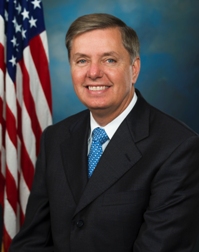 Five challengers toed the line to take on South Carolina U.S. Senator Lindsey Graham in Tuesday’s GOP primary, but the second largest field for the office in state party history couldn’t quite force the four-term incumbent into a runoff.
With all counties reporting, Graham received 56.8 percent of the primary vote – just north of the 56.4 percent he won in the seven-candidate field he faced in 2014.
Graham defeated Greenville appliance store owner Mark Lynch by 27.9 points – the smallest primary victory margin in history by a GOP South Carolina U.S. Senator and the smallest in the state in 60 years.
Since the mid-1960s, when Strom Thurmond switched his party affiliation to Republican, there have been 14 reelection bids by sitting GOP South Carolina U.S. Senators.
In six of these cycles, incumbents did not face any opposition and avoided a primary altogether:
- Strom Thurmond: 1966, 1972, 1978, 1990
- Tim Scott: 2016 and 2022
Previously, the most competitive Republican primary involving a South Carolina U.S. Senator involved Thurmond when he sought his final term in 1996 at the age of 93. Thurmond drew two challengers and still received 60.6 percent of the vote – defeating State Representative Harold Worley of Myrtle Beach by 30.5 points.
The remaining seven reelection campaigns are:
- 1984: Thurmond defeated retired journalist and foreign service officer Bob Cunningham of Pawleys Island by 88.6 points in a two-candidate field
- 2008: Graham beat retired orthodontist Buddy Witherspoon by 33.6 points in a two-candidate field
- 2010: Jim DeMint coasted to a 66.0-point win against Charleston lawyer Susan McDonald Gaddy in a head-to-head matchup
- 2014 (s): Appointed Senator Tim Scott routed Randall Young of Greenville by 80.0 points in a two-candidate field
- 2014: Graham beat State Senator Lee Bright by 40.9 points in a seven-candidate race
- 2020: Graham defeated businessman Michael LaPierre of Travelers Rest by 50.7 points in a four-candidate field
Senator Graham has particularly brought challengers out of the woodwork. From 1966 through 2026, Republican U.S. Senators from South Carolina have drawn a total of 20 challengers.
Fifteen of them have run against Lindsey Graham – one in 2008, six in 2014, three in 2020, and five in 2026. Interestingly, Graham ran for the Republican nomination unopposed in 2002 after serving four terms in the U.S. House of Representatives.
The last time a U.S. Senator from either party had a more competitive race than Graham this cycle came in 1966’s special election when (self-) appointed Democrat Donald Russell lost his party’s nomination to former Governor Fritz Hollings by 21.6 points. Hollings is the last Democrat to win a U.S. Senate race in the state – also winning reelection in 1968, 1974, 1980, 1986, 1992, and 1998.
Follow Smart Politics on X.
– “Fritz” Hollings (1922~2019) was the most recent Democrat to have won or served in the US senate from the Palmetto State. He also was/is the longest-serving junior senator in history (about 36 1/6 years), though he did manage to serve as the senior senator during his final two years in the seat (2003 – 2005).
– Sitting Congress Members this year have had a notably difficult time winning more high-profile offices, and SC continued the ‘curse’, with the 17.1% showing for the R gubernatorial primary by Representative Ralph Norman – and a stunning (though perhaps unsurprising) *12.1%* vote share (fifth place, behind even some bloke named Rom Reddy) for the social media-savvy Representative Nancy ‘don’t victim-shame me’ Mace.
– Had Graham – senior senator since 2005 – sought the office of governor, he assuredly would have garnered less than 56% of the vote. Would he have placed third – or worse?
With his sudden death on Saturday the 11th, Lindsey *Olin* Graham has become the first Palmetto State US senator to die in office since *Olin* DeWitt Talmadge Johnston in 1965 – in the middle portion of his own 4th term.
What are the odds that Mark Lynch, the runner-up in the recent primary election and a resident of the largest metropolitan region in the state, is appointed to the seat? Will an appointee be a caretaker for Graham’s unexpired term, or be an intended candidate for the next 6-year term? Will the state party hold a statewide convention like Maine to select its replacement nominee?
Replacement or substitute nominees have done poorly in US Senate elections, at least in recent decades. Since 1995 (3 decade ago) only Frank Raleigh Lautenberg in 2002 (Democrat/NJ) and Young Timothy “No Tax Tim” Hutchinson in 1996 (Republican/AR) have managed to win such elections after the original nominees had withdrawn for one reason or another.
While some states such as AK have been quite willing to elect appointed senators in their retention bids (“Uncle Ted” Stevens in 1970; Lisa Murkowski in 2004) in most others their retention rates have been so-so at best. The most recent such aspirant is Darlene/Darline Nordone, who took office on 14 July, succeeding her deceased elder brother Lindsey Olin Graham, who also was the original nominee seeking a fifth term. History is against her bid, though, on *both* of the aforementioned counts. First, she will have to survive the special primary election against a surfeit of competitors, including some erstwhile gubernatorial contenders who are chomping at the bits at a second statewide bite (also Mark Lynch, who came in a respectable second to Graham in the initial Senate primary, carrying populous Greenville and Spartanburg Counties). Should Senator Nordone somehow manage to become the nominee she will again have to overcome historical odds of winning as the substitute candidate.